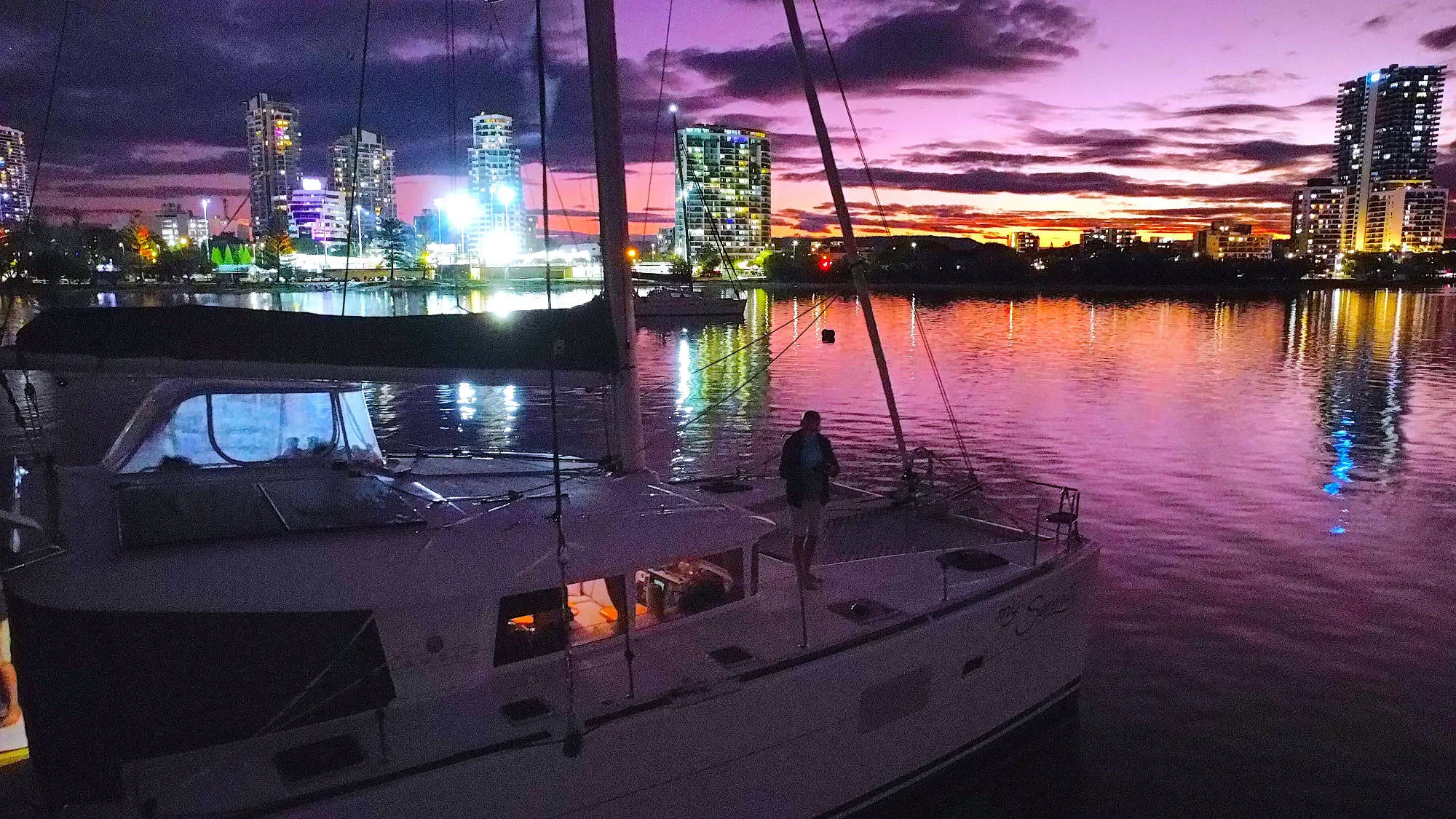
Offshore Passage Plan Fruition : It all comes down to this
Part: 4 of 4 - (1 month out to Departure)
Planning an offshore sailing passage brings everything together. The yacht needs to be ready, the crew needs to understand the plan, and the weather needs to provide a suitable departure window.
Offshore passages also demand decisions that coastal sailing may not. Once land disappears, there may be no easy access to fuel, spare parts, medical treatment or mechanical assistance. A good passage plan therefore considers what happens when conditions change, or a critical system fails.
This is the process we use before leaving an anchorage for an offshore passage in the South Pacific.
Confirm the Yacht is Ready
> Ships Library
> Crew Manual
> Maintenance Documentation
> Placards
> Registration (Original)
> Preparation Checklist Complete
> Captain's Folder
> South Pacific Charts and APP's
> Nav lights (portable too)
> Inflatable lifejackets, Jackline and Tethers
> Safety gear covers removed.
> External safety lines in place.
Confirm the Crew are Ready
Captain's Folder:
> All paper copies from the Crew Advice Forms,
> Arrival documentation pre-filled, and
> All passport and travel documentation
> PNR return documentation.
Crew Q and A:
> Open discussion (normally do this over a beer and dinner),
> Importance of sticking to what we know works and have been taught,
> En route is not the time to question why something is done a particular way. This can be brought up post the passage,
> Crew understand Fatigue and signs of Fatigue.
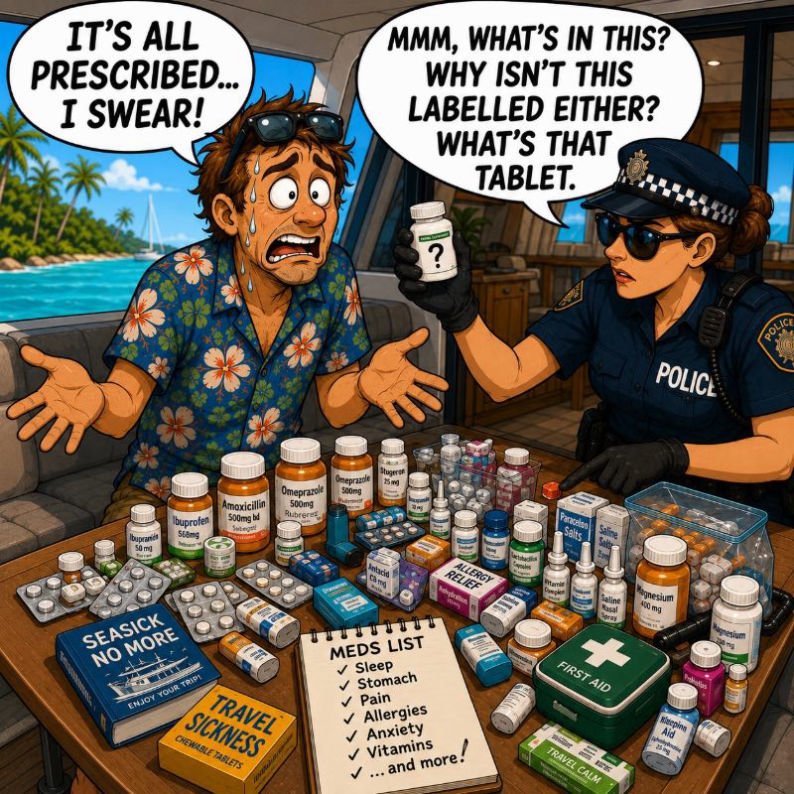
> What to bring is checked by each crew member (medications),
> Use of Inflatable lifejackets, Jacklines and Tethers, and
> Sickness (possibility of seasickness).
Searching for the Weather Window
Activate Forecaster
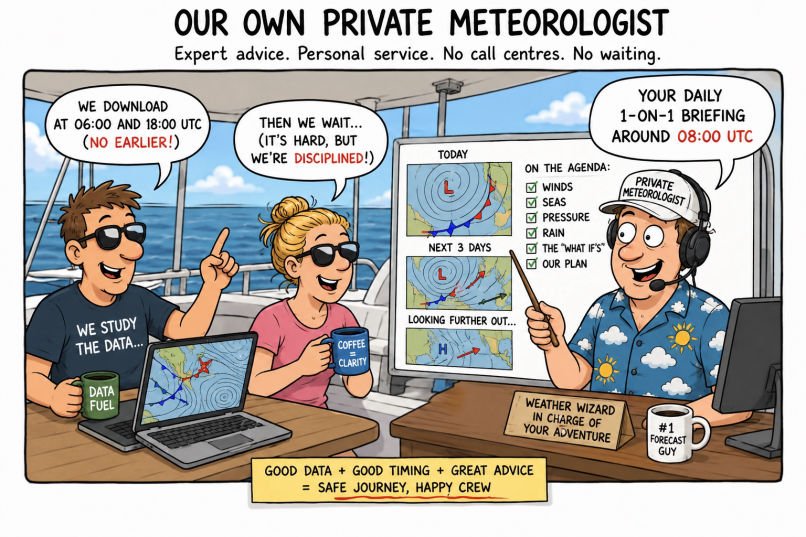
While we have advanced qualifications in meteorology, we always use our own private meteorologist. We get a one-on-one briefing of current, expected and projected thoughts each day.
We analyse our weather downloads at 06:00 and 18:00 UTC each day (no earlier), then await the meteorologists' update, around 08:00 UTC.
Some meteorologists' updates will give you weather windows to depart. Other meteorologists do not; they just supply weather analysis and leave the decision to you. Always compare against your own analysis, and if suitable, move to the next part of the departure plan, the passage time.
Diarise your guidelines for the meteorologist. We supply the meteorologist with our wish-list.
Set Departure Criteria
Departure routing available:
> Immediate routing - as soon as you drop lines,
> Tides - in your favour for bar crossing, etc
> Currents - expected as you leave the coast.
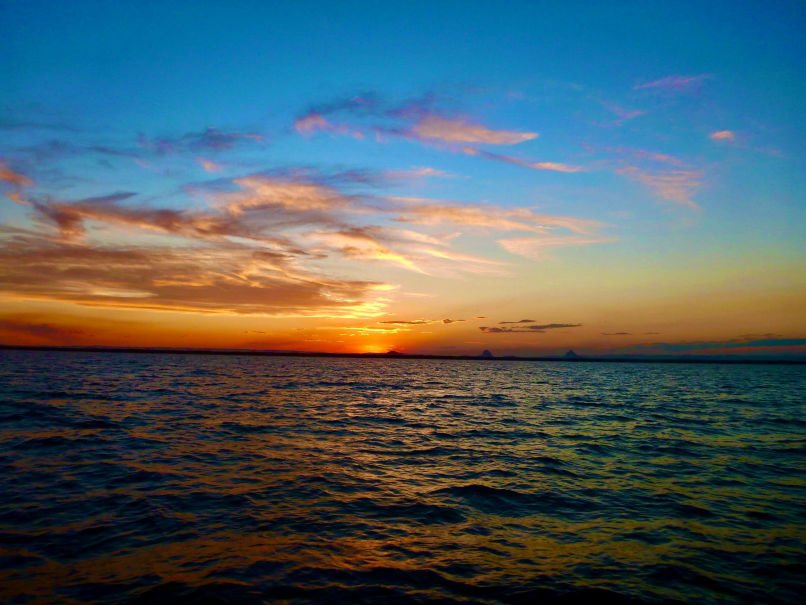
Charting
Paper Charts:
> Proposed Route in place,
> PNR in place and charts for return,
> On Chart - return 'dot-points' of what needs to be done (i.e. Customs, Immigration, Border Force numbers, etc.).
C-Map, Navionics, Open CPN:
> Latest updates completed (especially Open CPN with area downloads),
> Full chart area coverage in place for South Pacific operations.
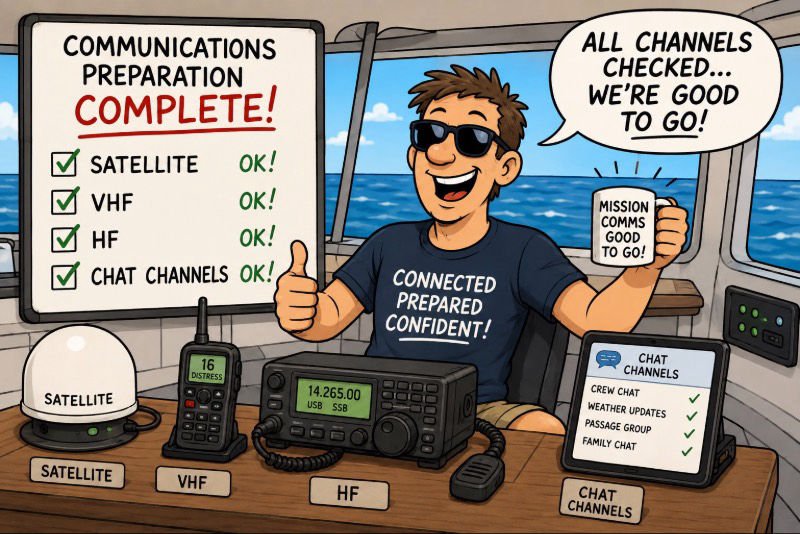
Satellite, VHF, HF and Chat Channels
Fixed Communication Devices:
> All fixed units serviceable,
> Radio Card next to Fixed VHF Radio unit,
> AIS - serviceable and
> DataHub Tracking - serviceable.
Portable Communication Devices:
> Portable handheld radios - serviceable and charged,
> Emergency Angle Grinder Battery charged (understand it's not Comms).
> Portable Aerial - handy and known positioning when used in an Emergency.
Chat Chanels and Apps:
> Rally Channel (written down) and relay time,
> WhatsApp Group established,
> WhatsApp Home established.
Mobile Devices:
> WhatsApp Installed,
> WARNING: Any Apps that require two-factor authentication, ensure it is sent to your email (not mobile phone number),
> Internet Based Mobile Apps installed (updated) and connected.
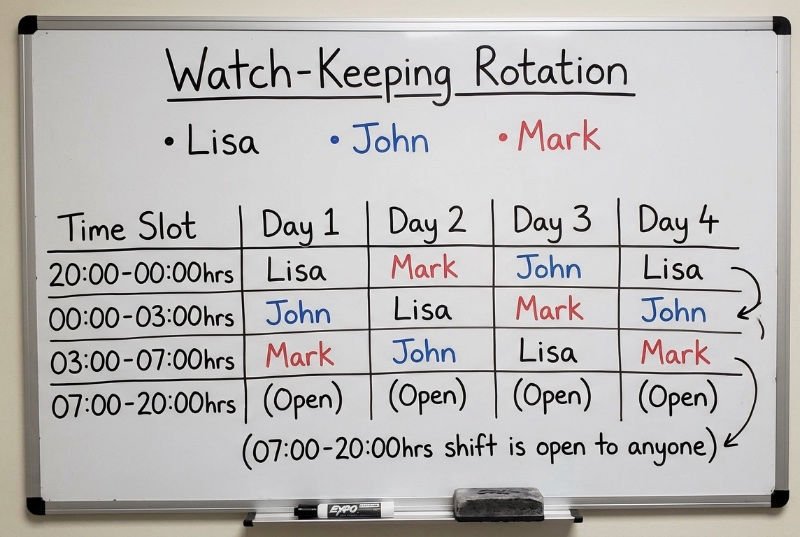
Advise Watch-Keeping Plan
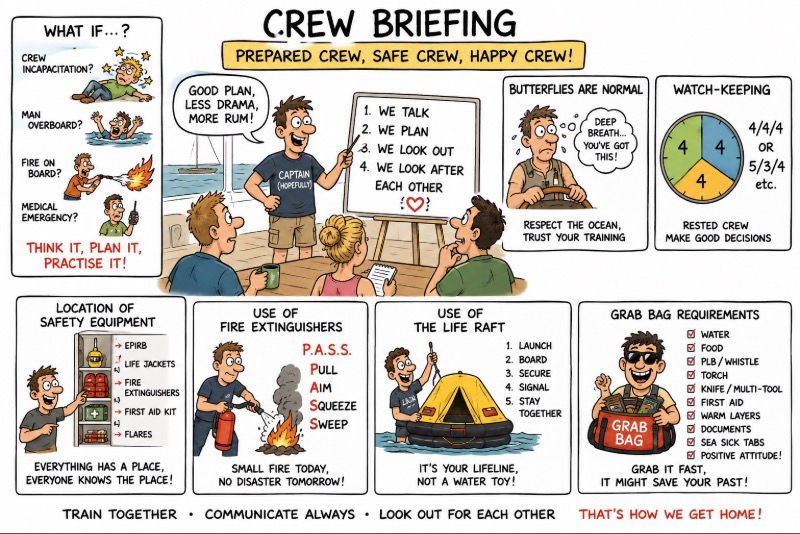
> Discuss a few 'what if...' scenarios (crew incapacitation, etc),
> Butterflies are normal,
> Watch-keeping - 4/4/4, or 5/3/4 etc
> Location of safety equipment,
> Use of Fire Extinguishers,
> Use of the Life Raft,
> Grab Bag requirements.
Provisioning Complete
It's time now to leave the fridge and the freezers closed.
If you have missed our PROVISIONING LIST, click this link.